Product teams rarely lack customer knowledge. The harder problem is making that knowledge easy to find, understand, and use at the moment a decision is being made.
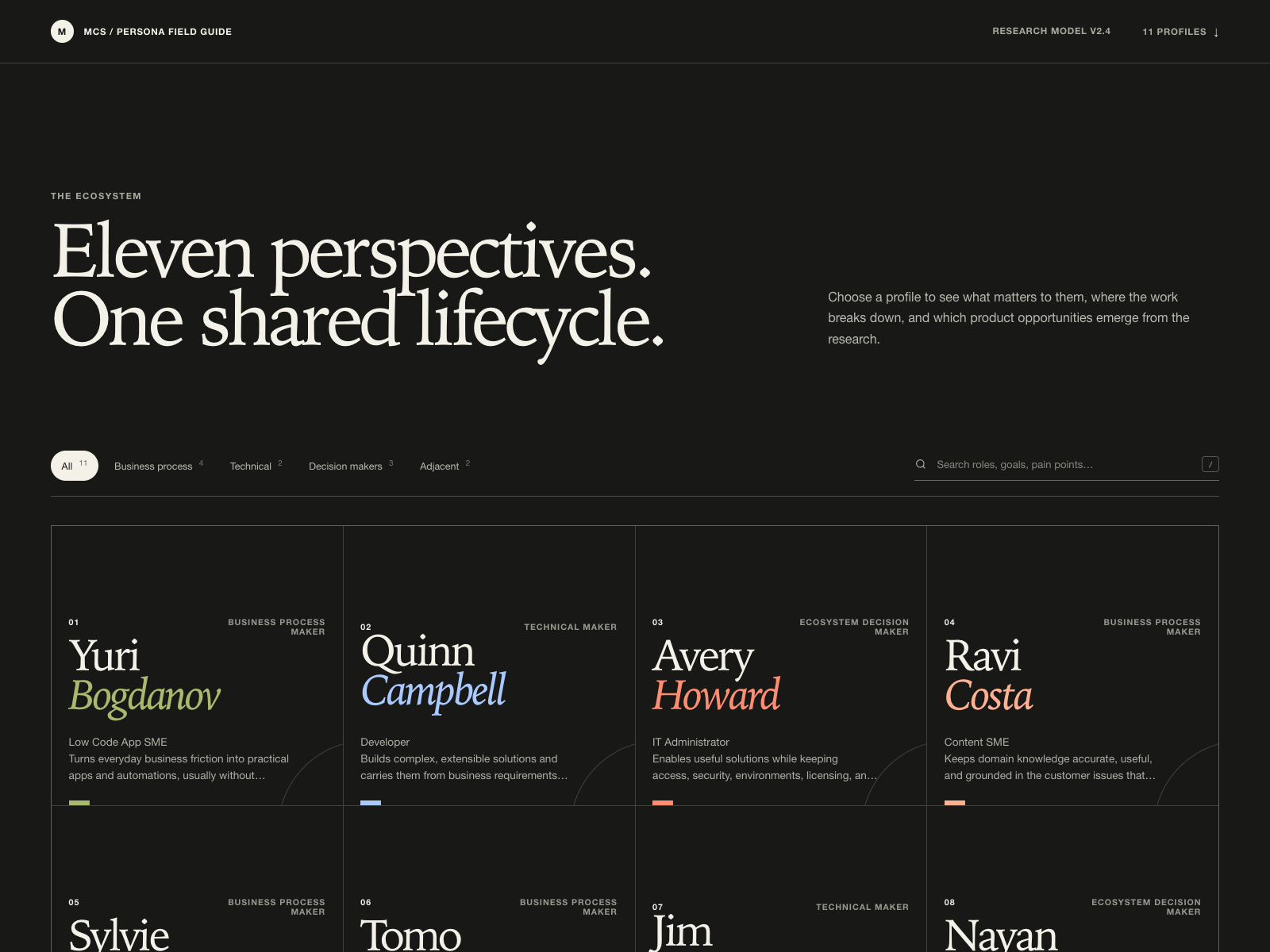
The MCS Persona Field Guide was created as an internal knowledge resource for the Microsoft Copilot Studio ecosystem. It brings eleven distinct perspectives into one browsable model, spanning business process makers, technical builders, decision makers, administrators, operators, subject-matter experts, and end users.
Rather than presenting personas as static documents, the field guide organizes the research around the questions designers ask during active work: What does this person need to accomplish? What gets in their way? Which parts of the product lifecycle do they influence? Where is there an opportunity to improve the experience?
Built for the way designers work
The experience is intentionally lightweight and exploratory. Designers can scan the full ecosystem, filter by role family, search across goals and pain points, and open a focused profile without losing their place. Small interactions—color shifts, responsive cards, and sliding profile panels—help the resource feel approachable while preserving the clarity of an editorial reference.
Each profile connects a person's context to priorities, goals, tensions, lifecycle involvement, and design opportunities. This structure helps teams move beyond demographic descriptions and toward actionable points of view. A designer can use it to pressure-test a workflow, identify overlooked stakeholders, prepare a research plan, or explain why a proposed experience must work across more than one role.
Interaction details
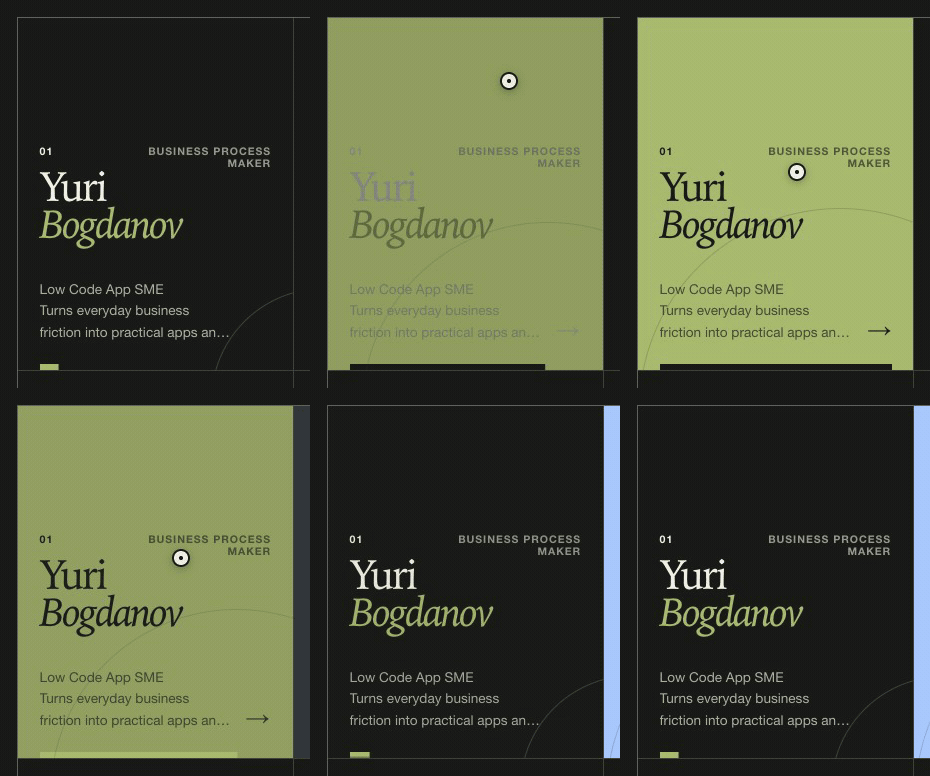
The interface uses motion to communicate state without interrupting exploration. Persona cards reveal their accent color and directional affordance on hover, filters reshape the directory in place, and the profile surface slides over the ecosystem view to preserve context.
From research archive to shared design infrastructure
The field guide is not intended to replace direct research or flatten complex people into fixed types. It is a synthesis layer: a shared starting point that preserves important distinctions and makes existing knowledge easier to apply.
That distinction matters. When research remains scattered across decks, notes, and individual memories, teams repeatedly spend time rediscovering context. A well-designed internal resource turns that context into durable infrastructure. It gives designers a common vocabulary, makes assumptions more visible, and creates stronger continuity between research, product strategy, interaction design, and delivery.
The result is a tool that helps designers ask better questions earlier—and keeps the people behind the product ecosystem present throughout the design process.
See the Persona Field Guide in the gallery ↗